Unit 1 · Methods of investigating
Initial idea: staying when the train comes
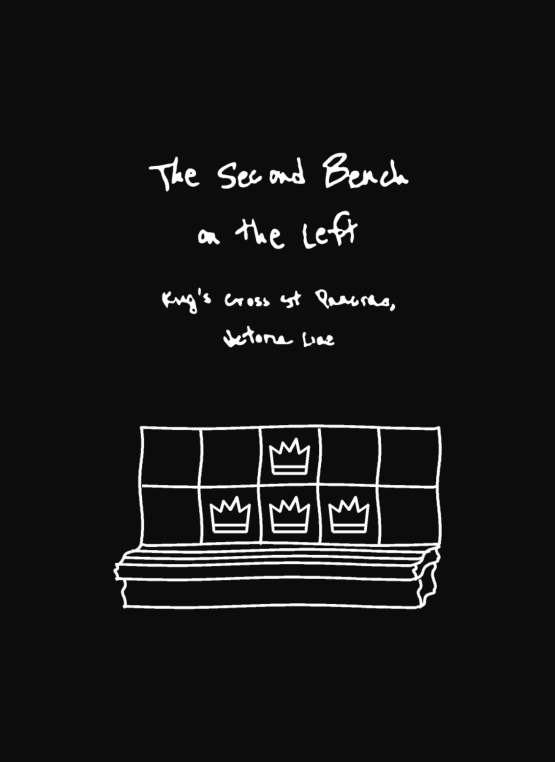
I chose the second bench on the left on the Victoria line platform at King’s Cross St. Pancras. A bench is somewhere to sit and wait, but on a platform the waiting is constantly interrupted. People arrive, settle for a few minutes, and leave when the train comes. Usually I am part of that movement. For this project, I stayed.
I wanted to look at how people behave while they wait and the rhythm behind it. Rather than trying to observe the whole station, I focused on the people using this one bench. The fixed location gave me a way to return to the same small space while the people and their actions kept changing.
At first, I paid attention to what caught my eye: what someone was carrying, what they were doing with their hands, whether they were talking or sitting quietly. I explored three ways of recording the site: objects, written notes, and sound. Each method kept something different. I wanted to understand what it made visible and what it left out.
Week 1: three methods
Method 1: objects
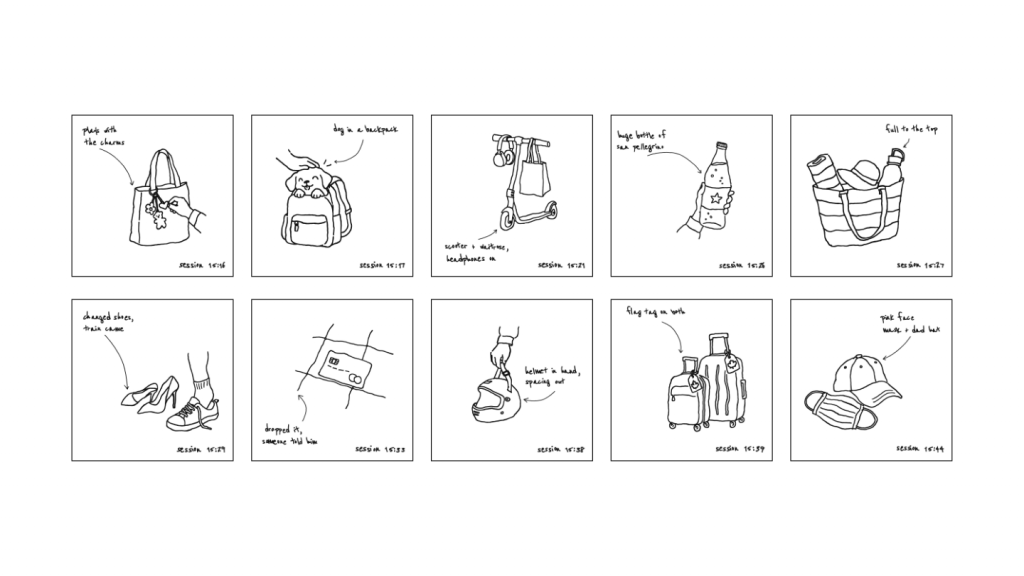
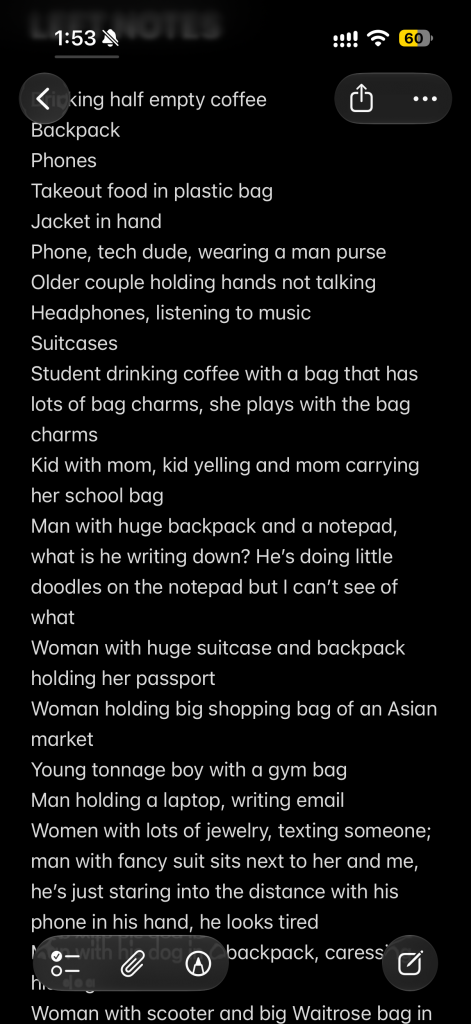
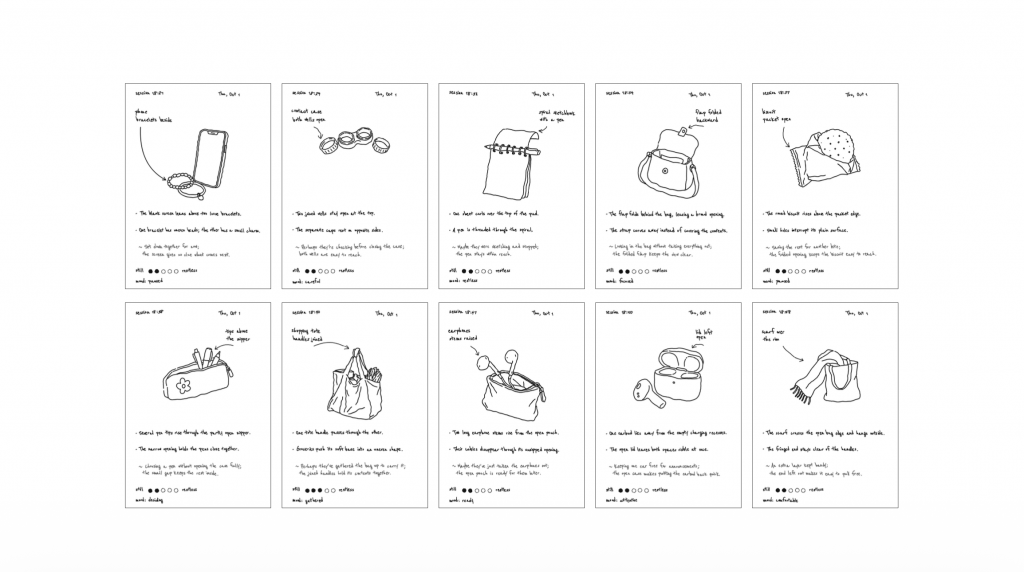
The first method focused on objects people carried. My notes included coffee, backpacks, phones, takeout food, suitcases, a scooter, and a motorcycle helmet. I developed simple line drawings from selected details rather than portraits of the people themselves.
The object became more interesting when something happened around it. A student played with the charms on her bag. A man stroked a dog in his backpack. A woman changed her shoes just before the train arrived and rushed on after putting them on. These moments kept bringing me back to the relationship between an object and an action. A drawing could keep the bag or the shoes, but a short note was needed to keep what made me notice them.
I wanted the visual language to feel quick and informal, with loose lines and small annotations. I kept asking for simpler drawings rather than polished sketches. The images needed to work as a record of attention, not as detailed illustrations of everything in front of me.
Method 2: notes
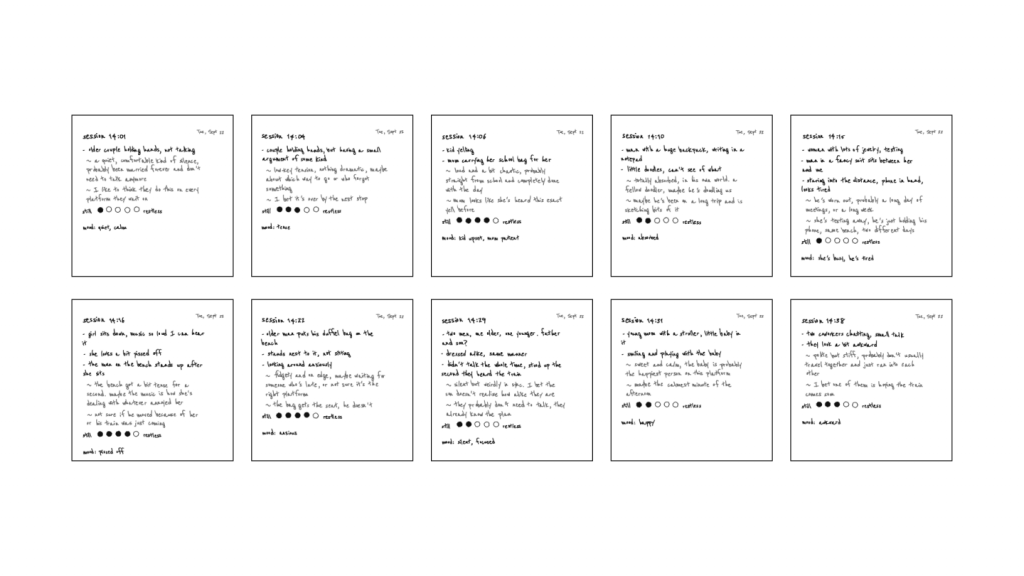
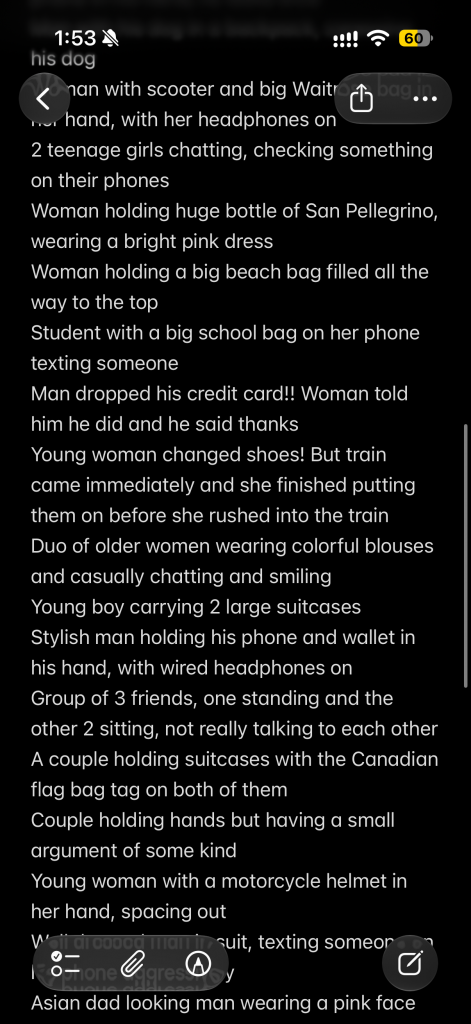
Writing let me keep gestures and interactions that an object drawing could not hold on its own. My original notes moved between short lists and longer accounts: an older couple holding hands without talking, two teenage girls looking at something on their phones, and a passenger dropping a credit card before someone told him.
Looking back at these notes, I noticed how quickly I moved from observation into interpretation. I could see a man staring into the distance with his phone in his hand, but describing him as tired was already a reading of his posture. I could see someone using a notepad, but I could not see what he was drawing. These gaps became part of the project rather than something I needed to fill.
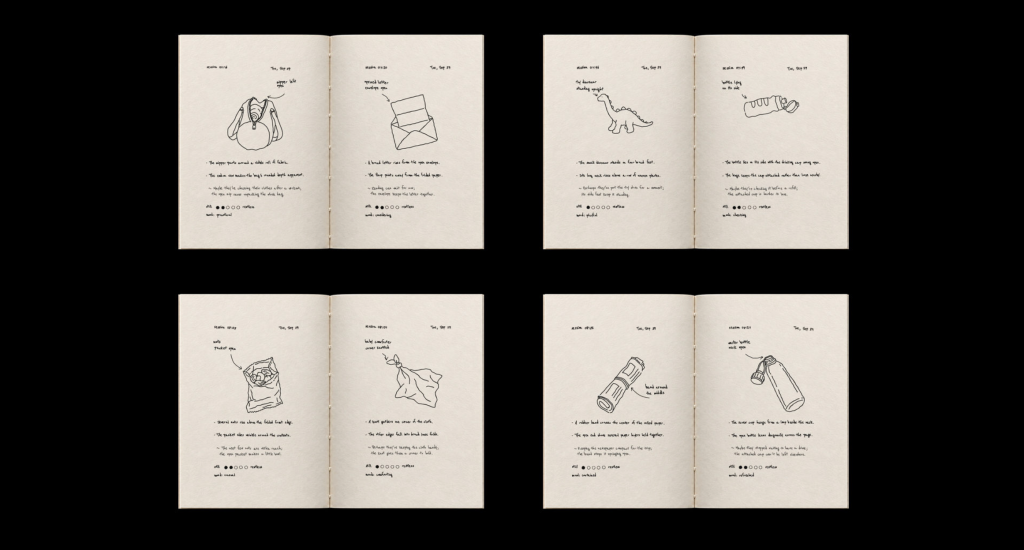
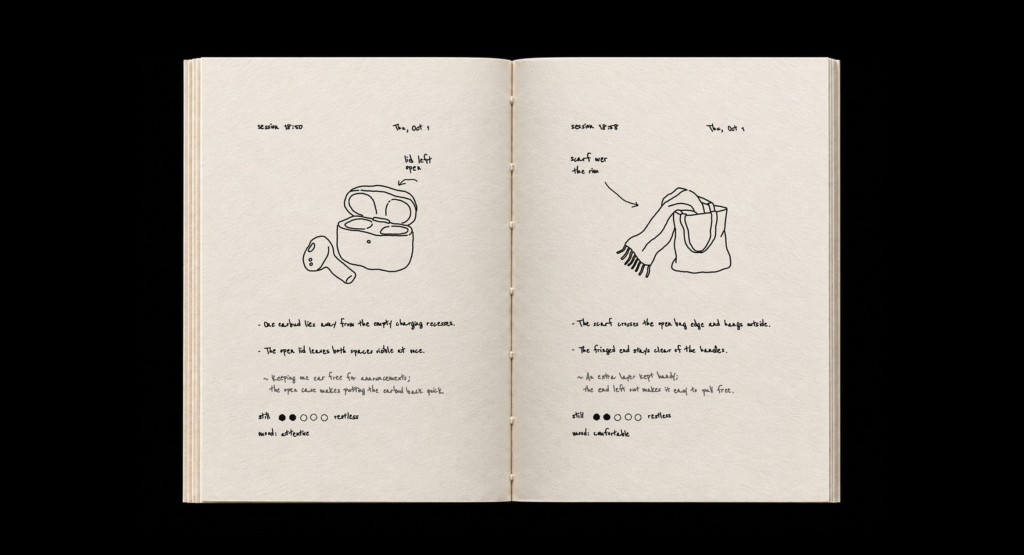
The note-card format included descriptions, possible interpretations, moods, and a still-to-restless scale. The mood and scale were my impressions, not measurements of someone’s internal state. I wanted the reader to see that difference, rather than take my impressions as facts.
Method 3: sounds
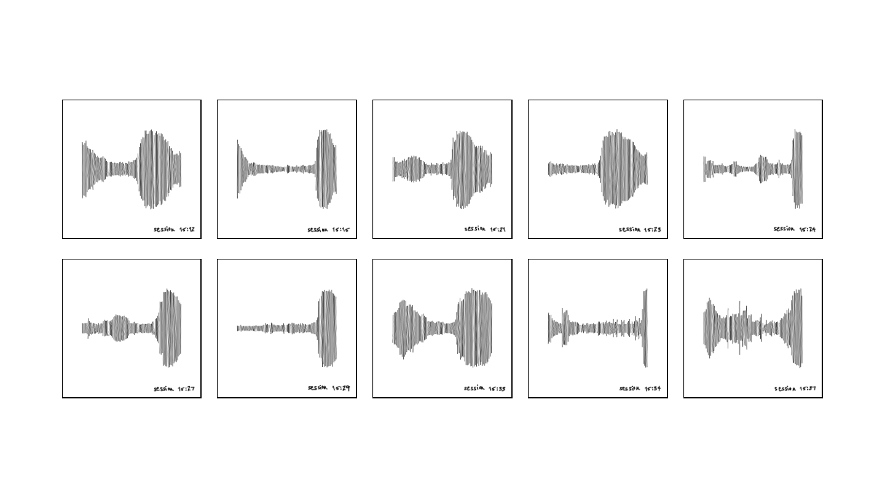
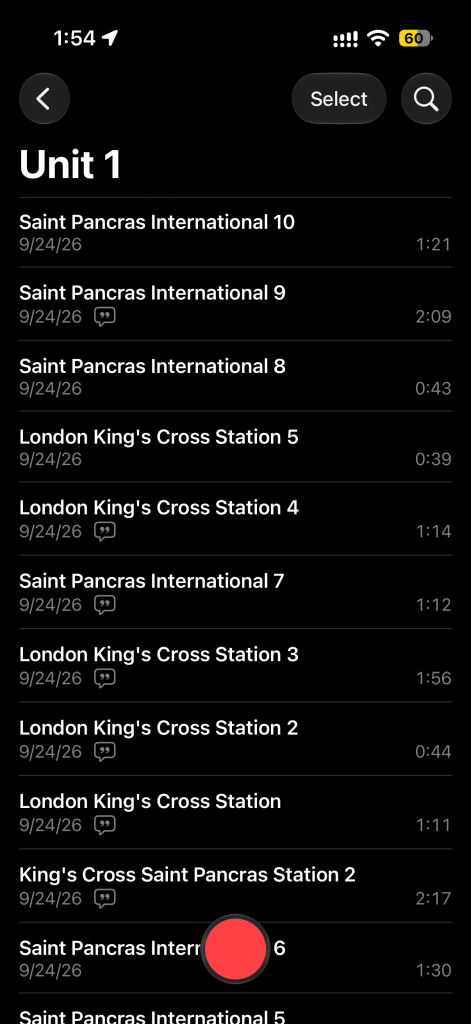
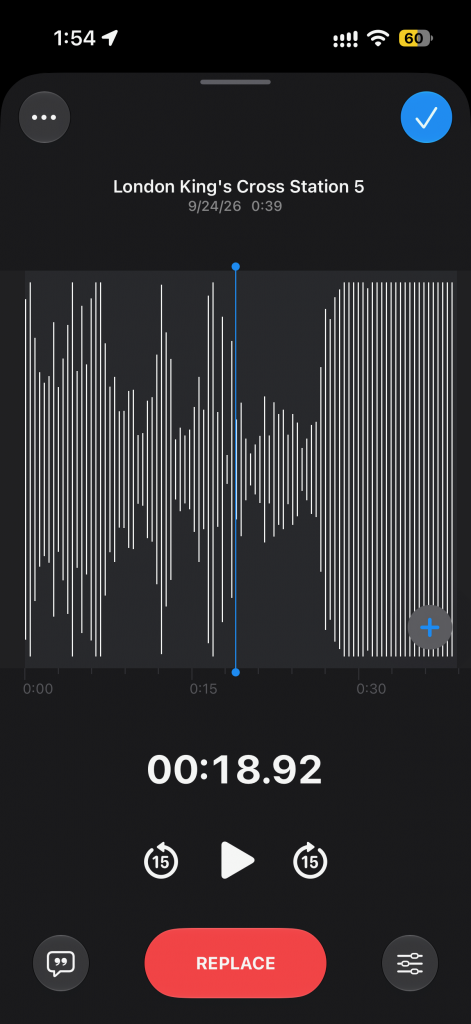
For the third method, I made short voice recordings at the site. The recordings gave me another record to return to, separate from what I had chosen to write down. I developed waveform drawings from the audio so changes in sound level could sit alongside the objects and written notes.
The waveform was a different kind of image: it showed quieter and louder sections without explaining everything that produced them. I did not want to treat the shape as proof of a particular event. It kept the changing intensity of the recording, while the audio remained the source to listen to.
By the end of the week, I had three sets of ten images for the presentation: object drawings, note cards, and waveform drawings. The methods were carried out on separate days, so they were different views of the site rather than three records of the same encounter. The original voice recordings retain their recording times. I had not timed the object and note observations individually, so the times later added to those presentation cards were assigned rather than recorded at the moment.
Week 2: combining drawing and writing
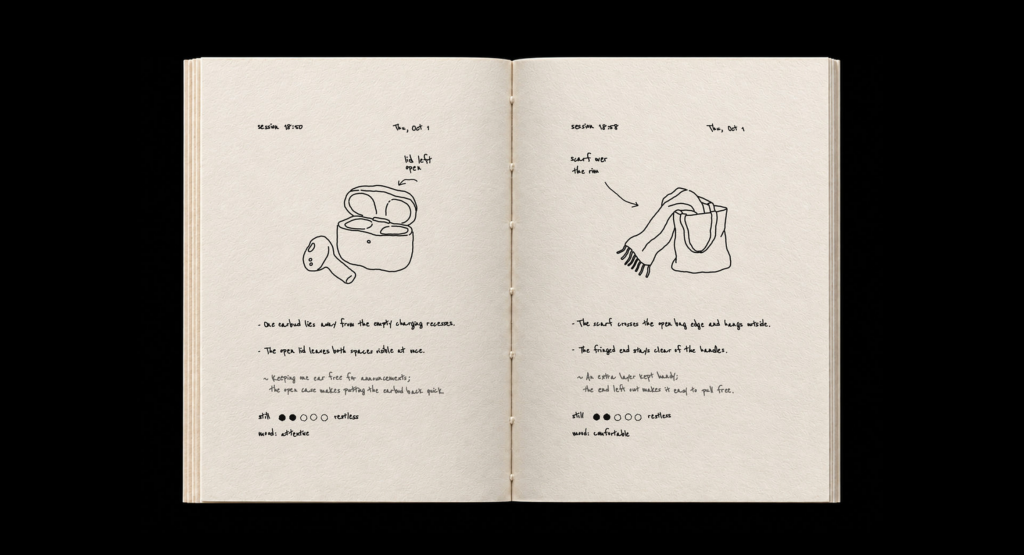
For the next stage, I brought the object drawings and written notes into one card format. They felt inseparable. The drawing kept the object; the writing kept the action around it.
I returned to the bench across three sessions: September 29 from 7 to 10 a.m., September 30 from noon to 3 p.m., and October 1 from 4 to 7 p.m. Working across different parts of the day gave me a broader basis for looking at the site. I wanted to build volume so that the project would not depend on a single striking moment.
The presentation brought together 150 selected cards. Each paired an object image with a short description and a possible interpretation, followed by a mood and still-to-restless scale. The format made me think about how I separated observation from interpretation. What was visible? What was I suggesting? What would a reader assume from the words I chose?
The cards are developed representations, not a verbatim transcript of every person who used the bench. The original notes and recordings remain important alongside them. The distinction matters because an orderly page can look more certain than the observation it came from.
I also worked on a related-practice section for the presentation. This helped me connect the project to questions about attention, selection, and how an observation becomes something another person can read. The research needed to sit beside my process rather than become a separate collection of references with no connection to the work.
As the number of cards grew, I wanted an overall view rather than isolated observations. I began developing a small book, arranged by time within each day. The sequence could let a reader move through the collection and compare details without assuming that every encounter belonged to one continuous story.
Week 3: the book
For week 3, I expanded the set by 200 cards, bringing the book to 350. I kept the established visual language consistent: black lines, loose lettering, small annotations, and space around each element. Much of the editing involved checking whether drawings and captions agreed, whether arrows pointed clearly without touching the objects, and whether the text had enough room to be read.
I developed an A6 book file with one card per page. The entire sequence is ordered by its session labels, date, and then time, rather than keeping the first and second sets separate. These labels organize the book; they do not turn reconstructed entries into minute-exact records. The cover carries the project title and the image of the bench. This is a print-ready file, not a book I have physically printed and bound.
Where the project is now
The project started with noticing what people carry and do while they wait. It has moved toward looking at how I select, interpret, and organize those details. Waiting contains small tasks and interactions that disappear quickly: adjusting a bag, handling a phone, changing shoes, or alerting someone to a dropped card.
I can record an action without knowing the person’s reason for it. That limit is something I want the work to keep visible. The book gives the collection a sequence. My next step is to look back through it and ask what the collection reveals about the site, including what my attention might have missed.